
Company: PAlo Alto Networks
Unified Policy Creation Template
As part of the Platform Experience team, I designed shared frameworks used across multiple Palo Alto Networks products.
Policy creation is the most common and critical workflow used in the Network Security platform, allowing admins to define rules that protect digital assets and manage security risks.
However, each microapp team had built its own version of this workflow, resulting in 19 different policy creation experiences with varying structures, interactions, and terminology.
The challenge was to create a unified framework that standardizes policy creation while remaining flexible enough to support the diverse needs of different security microapps.
2024
Definition
The Problem
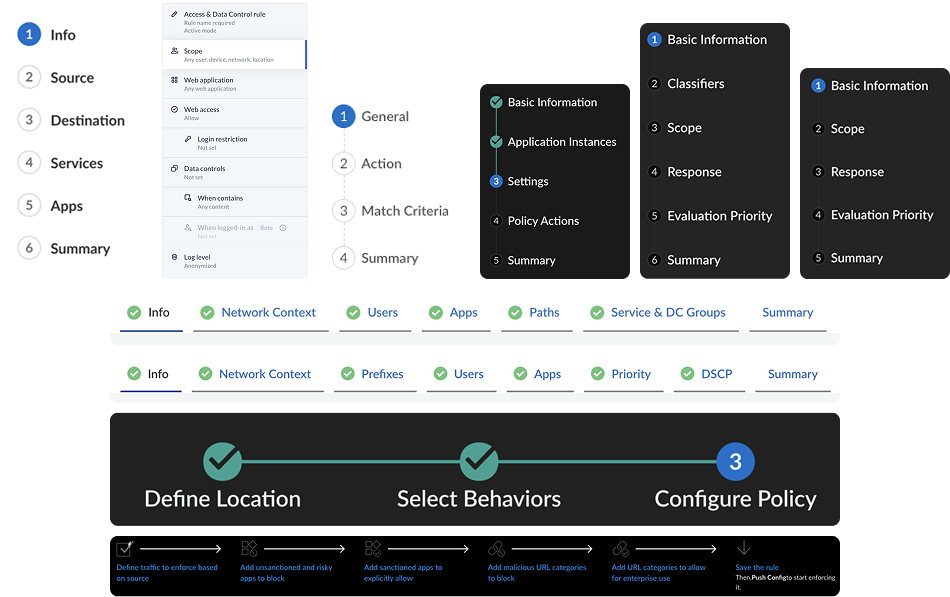
Across the platform, policy creation experiences had evolved independently across microapps such as Prisma Access, SD‑WAN, IoT Security, SaaS Security, and Data Loss Prevention. Although these workflows solved the same problem, they differed significantly in structure and interaction patterns.
Key challenges:
Inconsistent workflows across the platform forced users to relearn the policy creation process
Users struggled to undersand policy configuration steps and logic
Teams repeatedly redesigned the same workflow due to the lack of a shared framework
Maintaining consistency across the platform became increasingly challenging as more policy experiences are introduced

Research
Discovery
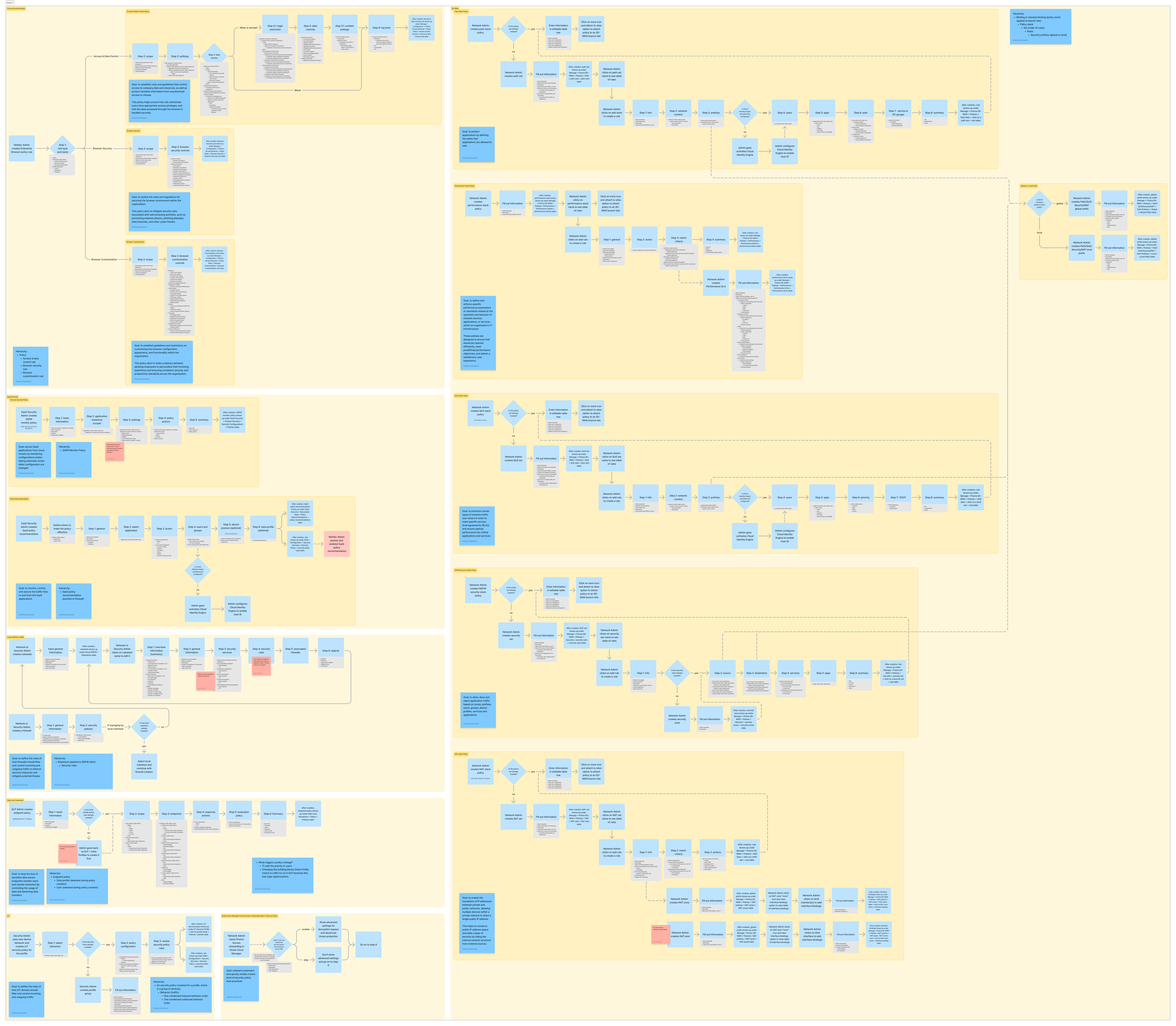
To understand the landscape, I audited all 19 policy creation experiences by mapping the user flow for each. I found that both the user experience and user interface varied substantially in structure, terminology, and inputs.
Card Sorting Workshop
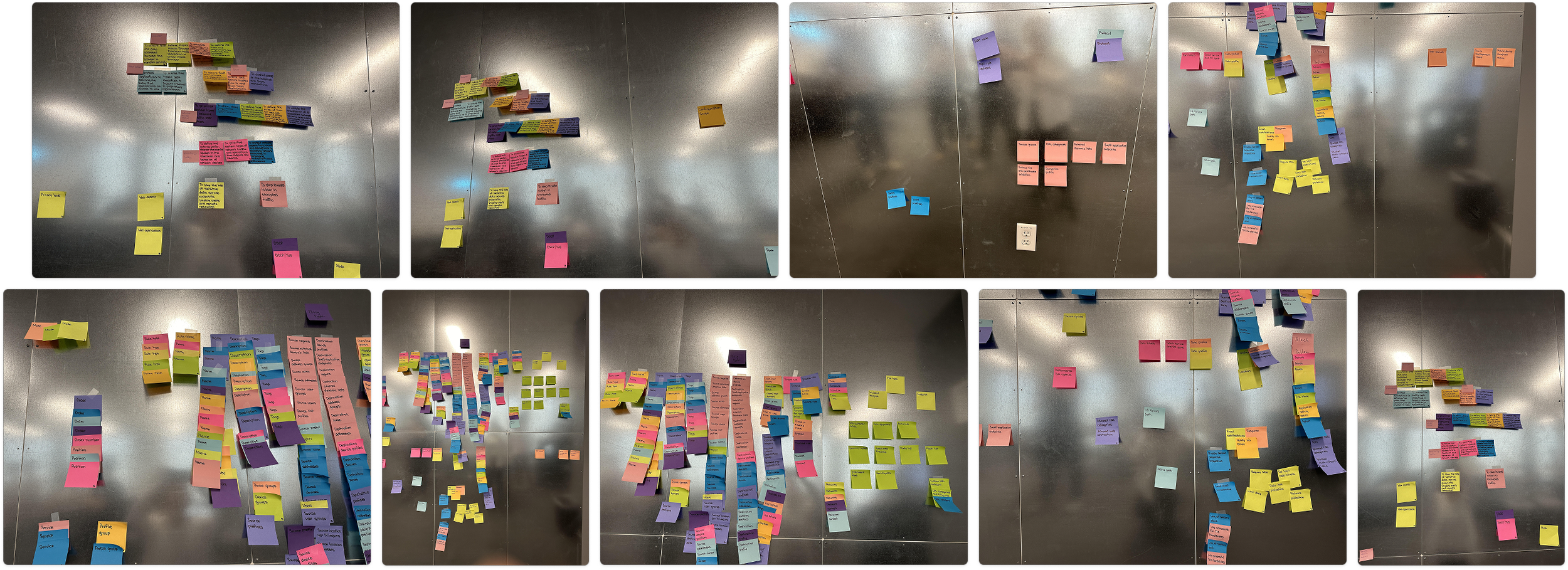
As I mapped the policy creation flows, I documented the inputs collected in each experience. I planned and facilitated a card sorting workshop with UX Designers across multiple microapp teams to uncover shared patterns.
Before the session, I translated every input from the policy flows into individual sticky notes. During the workshop, the group collaboratively sorted and clustered these inputs into logical categories. The workshop revealed that most policy creation experiences follow a repeatable step-based structure, which became the foundation for the unified framework.
Common steps:
General Information
Match Criteria
Rule Actions
Summary
Solution
Unified Policy Creation Template
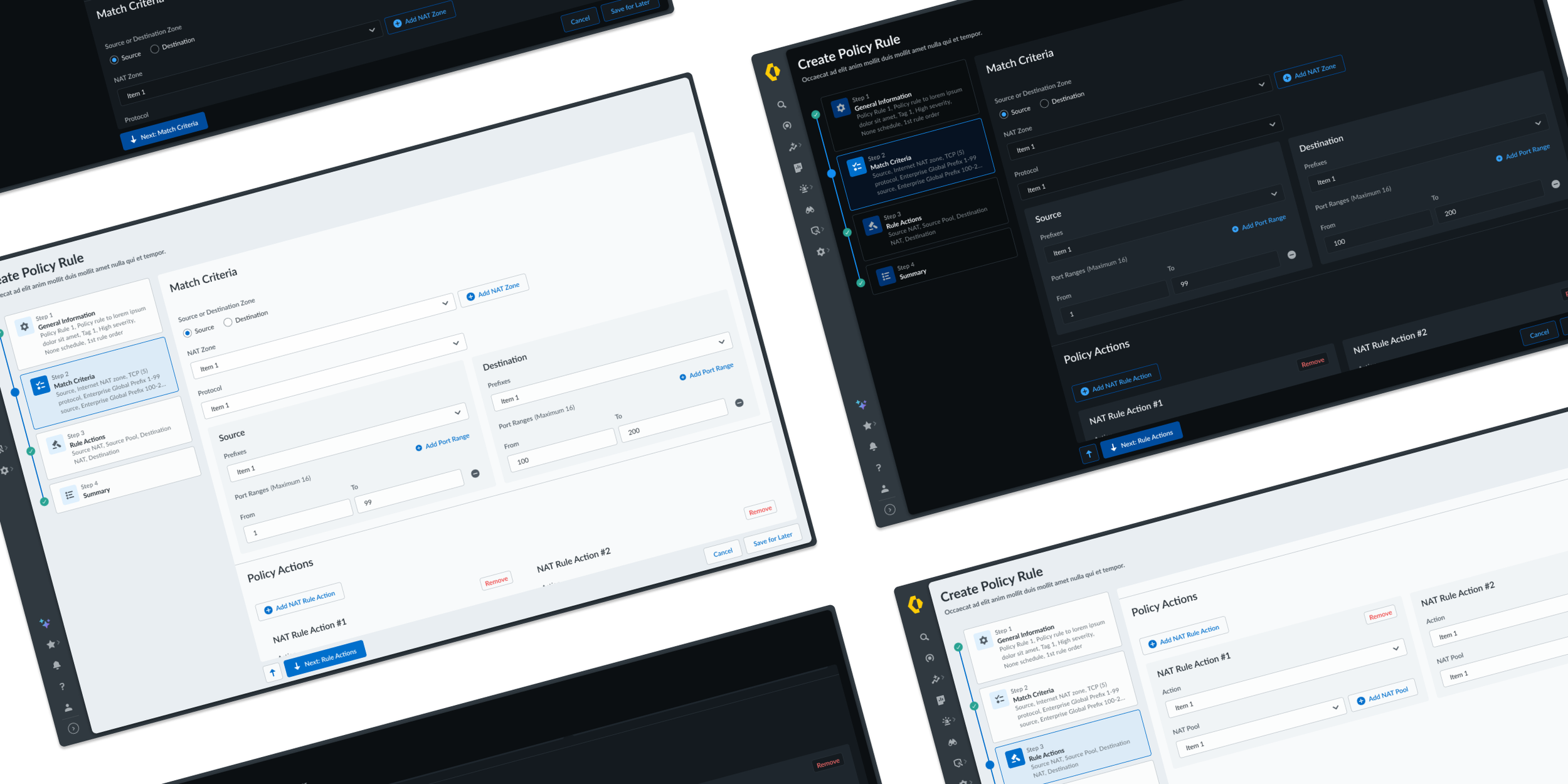
I designed a template to standardize policy workflows across the platform while remaining flexible enough to support multiple mircoapp needs. The template introduces a consistent step-by-step framework, reusable yet flexible layout, and interaction guidelines that UX Designers across the platform can use. This approach reduces duplication of design efforts and created a more predictable experience for users.


Usage and Interaction Guidelines
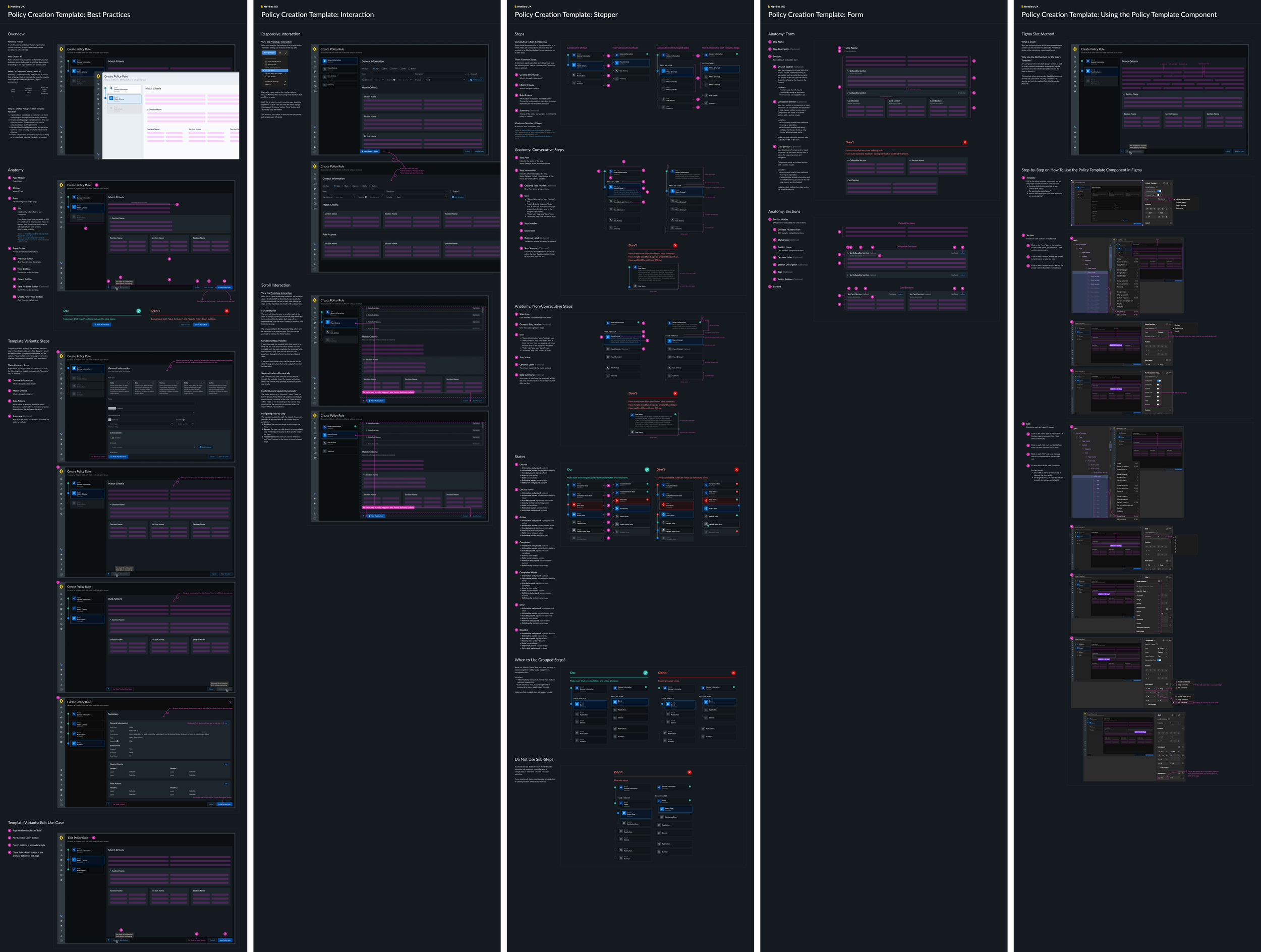
As part of the framework, I created guidelines to ensure the unified policy creation template is implemented consistently across the platform. The guidelines provide UX Designers with clear direction on how to apply the framework, including:
Best practices for structuring policy workflows
Interaction patterns for screen responsiveness and step navigation
Proper use of the stepper component
Guidance on designing form sections within each step
Instructions for using the template in Figma, including the slot-based component method
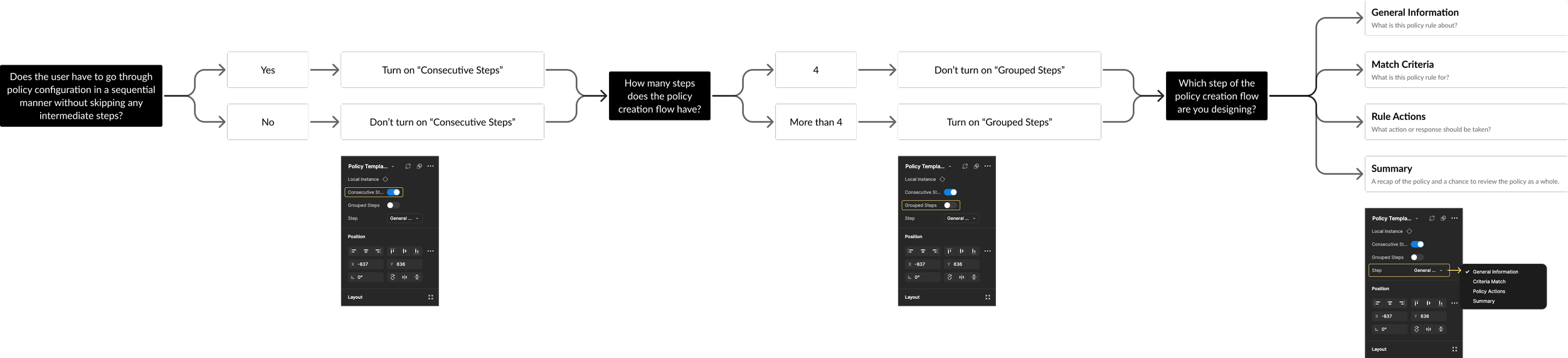
Which Unified Policy Creation Template variant should I use in Figma?
Validation
Stress Test Workshop
To validate the functionality and flexibility of the template, I ran a stress test workshop with UX Designers on the platform.
Participants recreated their own policy experiences using the new template to test whether it could support different policy flows without structural changes.
The exercise confirmed that the slot-based template could accommodate all policy experiences while maintaining a consistent structure, allowing designers to build quickly without detaching the Figma component.
User Research Insights
In parallel, I partnered with UX Research to conduct user interviews for the new AISB policy feature, evaluating admins’ first impressions of the new template.
Participants responded positively to the simple and structured layout, noting that the step-based flow made the policy creation process easier to understand. They also emphasized the importance of maintaining a consistent policy experience across the platform to reduce confusion when moving between microapps.
These insights reinforced the need for a unified policy creation framework with a predictable structure and interaction patterns.